
How to remove gel polish at home
Gel polish comes off at home with 100% acetone, cotton and plastic food wrap, and the soak takes about ten minutes. The steps below are the ones the American Academy of Dermatology gives. The one thing not to do is peel it.
If you would rather not do it yourself, a KuQueen tech can take it off at your house as part of our gel removal and nail repair service, with a new set straight after if you want one.
What you need
- Petroleum jelly
- Cotton balls or cotton strips
- Scissors
- 100% acetone
- Plastic food wrap
- A washcloth
- A thick towel
- Gentle, fragrance-free soap
Check the label for 100% acetone. A bottle sold as nail polish remover is not always pure acetone, and the method is written for the pure kind.
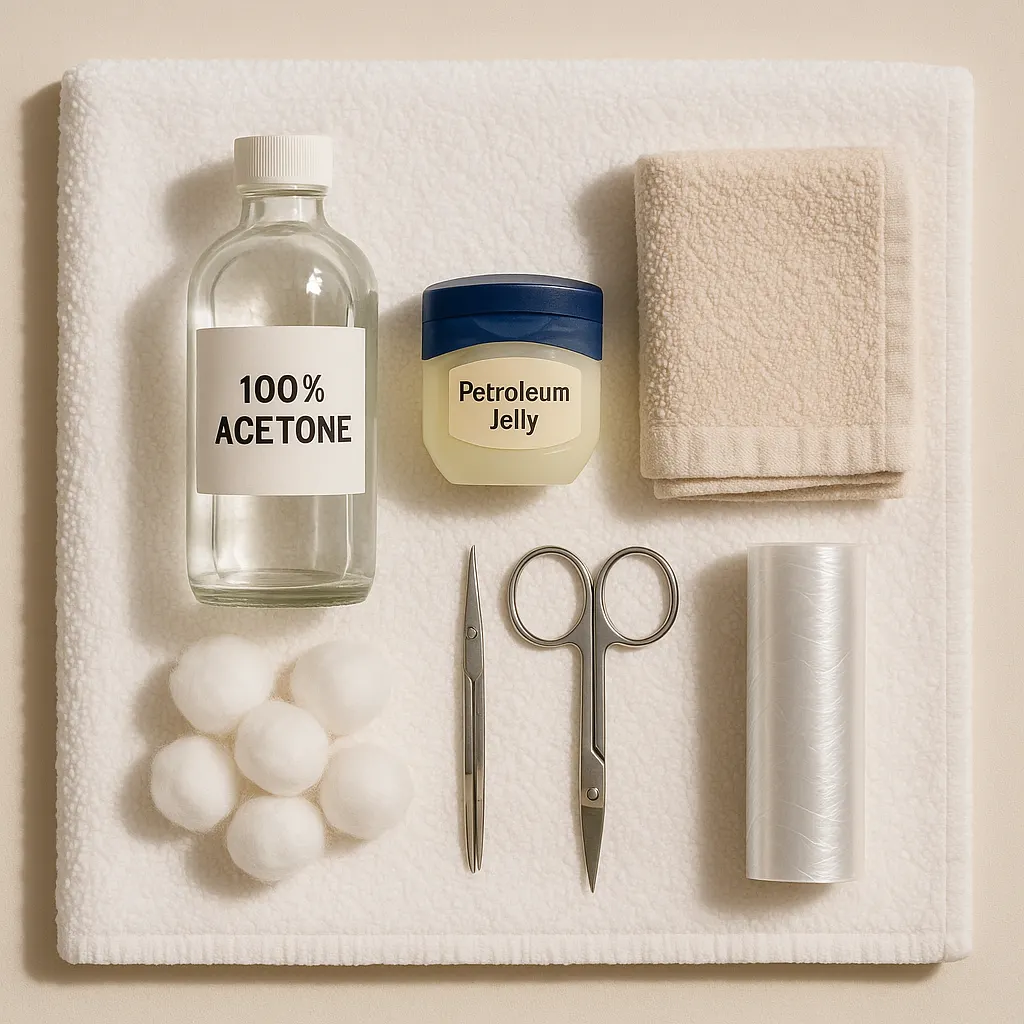
Set up before you open the acetone
Acetone can damage sinks, countertops and furniture. The Academy suggests lining the table with plastic wrap and laying a thick towel on top. Work in a room with the window open, away from a lit stove or any flame: acetone is flammable.
Removing gel polish, step by step
- 01
Protect the skin
Put a thin layer of petroleum jelly on each cuticle and the skin around the nail. Acetone dries skin out, and this keeps it off.
- 02
Cut the cotton to fit
Cut the cotton to the size of each nail. About a quarter of a cotton ball does a little finger or a small toe, and about half does the rest.
- 03
Soak the cotton
Soak each piece of cotton in acetone.
- 04
Wrap each nail
Lay each soaked piece on the nail it was cut for and wrap the nail in plastic food wrap. Seal it tightly, but not so tight that it cuts off the circulation in your finger.
- 05
Wait ten minutes
Leave the wrap on for ten minutes.
- 06
Wipe away what is left
Take off any gel that remains with a washcloth you have just run under warm water. Touch only the nail, so the acetone stays off the skin around it.
- 07
Wash
Wash your hands or feet with a gentle, fragrance-free soap and water to get the acetone off.
- 08
Moisturize for a week
Rub petroleum jelly into your cuticles and the skin around your nails every day for seven days.
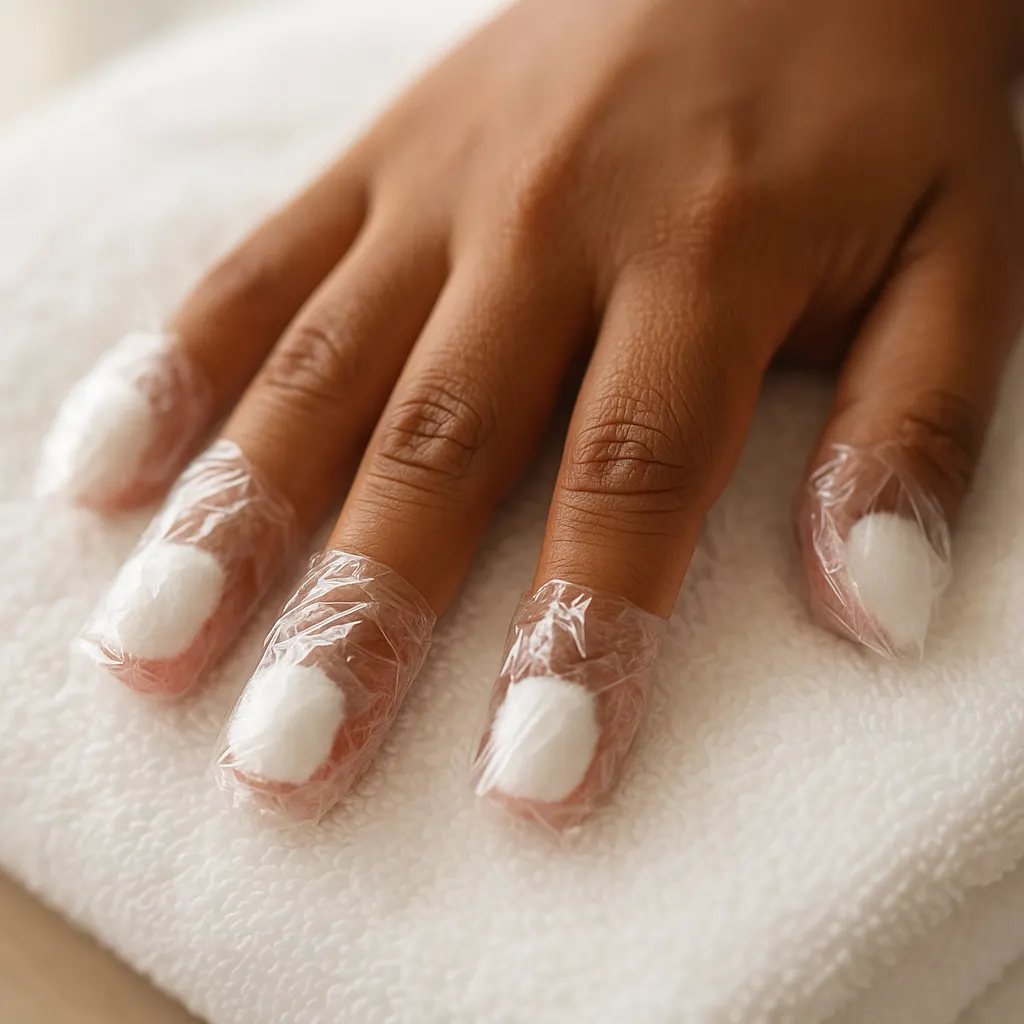
Steps from the American Academy of Dermatology, Dermatologist’s secret for removing gel nail polish at home, with board-certified dermatologist Shari Lipner. The flame warning is from the acetone label.
What damages the nail
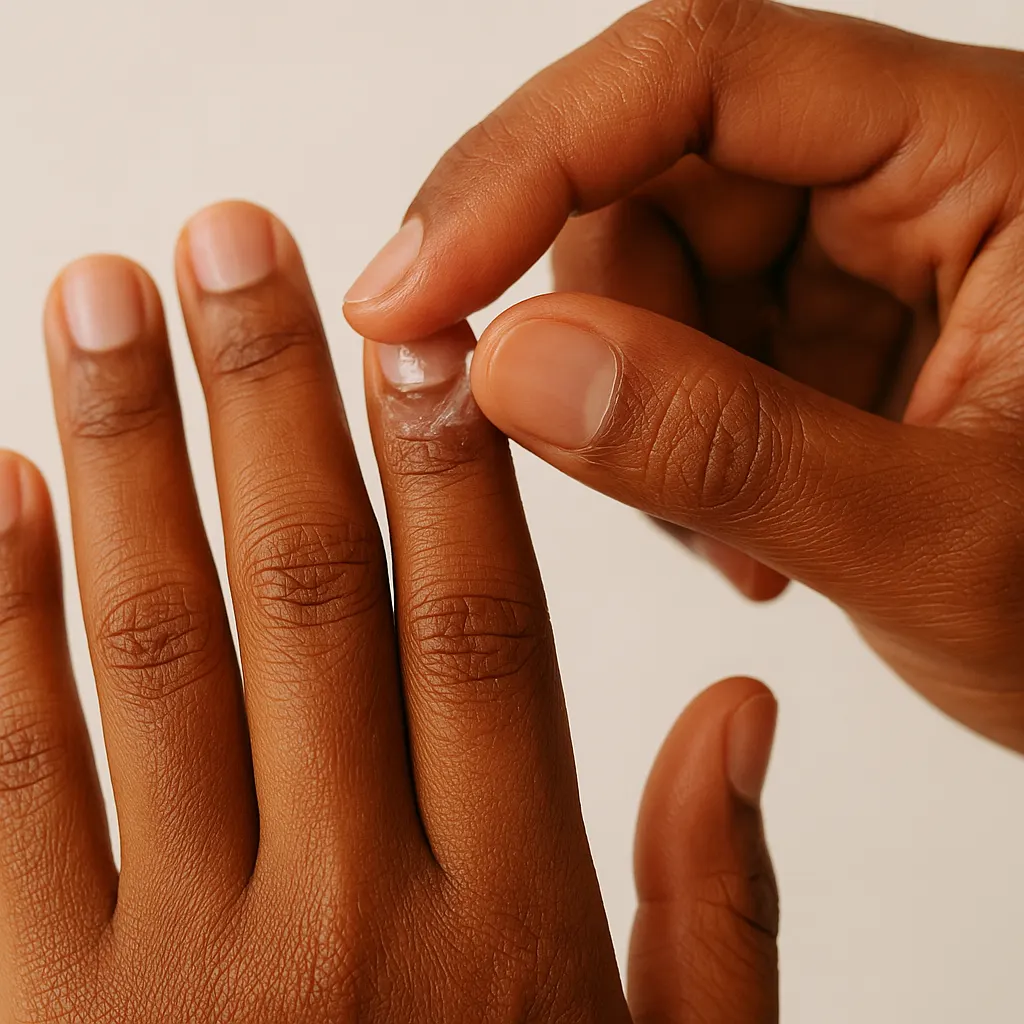
Peeling, picking and filing the gel off. The Academy says each of these can significantly damage your nails, because the gel takes the top layers of the nail with it.
Scraping with an orange stick. The Academy says it can injure the nail and leave white spots. The softened gel should wipe away with a warm, damp washcloth. If it will not, it has not soaked long enough.
Skipping the petroleum jelly. Acetone dries the skin around the nail, and a week of moisturizing afterwards is part of the method.
Why plastic wrap rather than foil
A lot of removal guides use foil. The dermatologist behind the AAD method uses plastic food wrap instead, because it seals tighter and the acetone is less likely to drip.
The same steps work on toes too: the Academy files this guide under pedicures. If you wear gel on your toes, it comes off the same way.
Removing gel polish without acetone
The Academy gives one other way: let the gel grow out. Clip the nail once a week and the gel goes with the clippings. It is slow, about six months for fingernails and 12 to 18 months for toenails, and it is the only alternative the dermatologists list.
Peeling it off is the shortcut people take instead, and it is the one that does the damage. If acetone dries your skin out or you cannot get any, growing it out or having a tech take it off are the two ways that leave the nail whole.
Removing acrylic nails and polygel
Acrylic and polygel are extensions, and they do not lift off after one soak the way gel polish does. Both are filed back first and then soaked, and the soak takes longer: thirty minutes or more for acrylic.
The filing is the part that is easy to overdo on your own nail. We take off polygel, acrylic and dip powder at home, and gel, acrylic, soft gel and dip compared sets out how each one comes off.
After the gel is off
Keep up the petroleum jelly for the week. If your nails look thin, dry or peel at the tips, the Restorative Manicure on our manicure menu includes a cuticle oil soak and a strengthener base coat, and Nail Repair fixes a crack or a chip.
Going straight back to gel? A tech can take the old set off and put a new one on in the same visit. Gel manicure at home covers how it goes on and how to make it last.
Gel removal questions
- How long does it take to remove gel polish at home?
- The soak itself is ten minutes under the wrap, in the American Academy of Dermatology method. Add the time to cut the cotton, wrap each nail and wash afterwards.
- Can I peel gel polish off?
- No. The Academy says picking or filing off gel polish can significantly damage your nails. Peeling takes the top layers of the nail with the gel, which is what leaves nails thin and bendy.
- Should I use foil or plastic wrap?
- The dermatologist behind the AAD method recommends plastic food wrap. Plastic makes a tighter seal than foil, so the acetone is less likely to drip.
- Can I scrape the gel off with an orange stick?
- The AAD method says not to. An orange stick can injure the nail and leave white spots on it. Wipe the softened gel away with a warm, damp washcloth instead.
- Can I remove gel polish without acetone?
- The Academy gives one alternative: let the gel grow out and clip the nail once a week until it is gone. That takes about six months on fingernails and 12 to 18 months on toenails. Acetone is the method it calls most effective at home.
- Will acetone damage my table?
- It can. The Academy warns that acetone can damage sinks, countertops and furniture, and suggests lining your work surface with plastic wrap and putting a thick towel on top before you start.
- Does the same method work on toenails?
- Yes. The Academy files this guide under pedicures, and the cotton sizes it gives include small toes. Gel on toes comes off the same way.
- Does it work on acrylic or polygel?
- Not on its own. Acrylic and polygel are filed back first and then soaked, and the soak takes longer than gel polish. That filing is easy to overdo on your own nail, which is why we suggest having a tech do it.
Rather leave it to someone else? Book gel removal at home and a tech brings everything to your house.
Book gel removal at home
Enjoy safe, salon-quality manicure and pedicure at home, with clean, sterilized tools, all delivered to your door.
Every day, 9:00 AM to 7:00 PM. Appointments available daily.